¶ 2-1-2-1 Formation
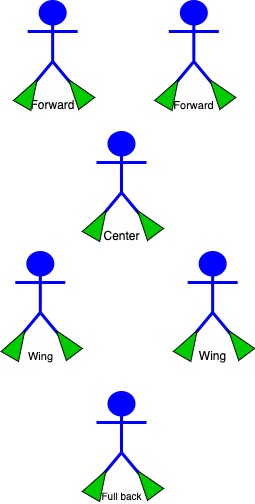
¶ Formation Overview
The 2-1-2-1 is a vertically layered wall-pressure formation.
Formation Name: 2-1-2-1
Player Layout: 2 Forwards, 1 Center, 2 Half Backs, 1 Full Back
Play Style: Vertical Support / Wall Cycling
The formation prioritizes:
- Multiple vertical support layers
- Maintaining support predominantly behind the puck
- Wall progression and controlled cycling
- Creating space through short angled movement
- Structured defensive recovery
¶ Tactical Diagrams
See how the formation is applied in different game situations:
¶ Tactical Diagrams
- 2-1-2-1 Strike
- 2-1-2-1 Advantage Puck
- 2-1-2-1 Advantage Puck in Front of Goals
- 2-1-2-1 Disadvantage Puck
- 2-1-2-1 Left Wall Play
- 2-1-2-1 Right Wall Play
- 2-1-2-1 Defending Corner
- 2-1-2-1 Attacking Corner
¶ Main Strengths
- Multiple vertical layers of defense
- Strong support behind the puck carrier
- Excellent wall progression structure
- Safe recycling options under pressure
¶ Main Weaknesses
- Vulnerable in wide pools against horizontal formations
- Can struggle against fast outside switches
- Heavily dependent on wall play
- Requires disciplined cycling support
¶ Core Principles
- Cycling possession backward safely
- Swimming at 45-degree support angles
- Drawing defenders out of position
- Attacking newly created open space
- Maintaining support behind the puck at all times
- (see Open Water Play)
¶ Passing Style
Passing in the 2-1-2-1 is built around support behind the puck and controlled possession rather than aggressive forward progression.
Players should:
- Look for support behind the puck first
- Recycle possession when forward progression closes
- Use backward passes to maintain control
- Support the current puck carrier from behind
- Create attacking angles through swimming
- Retain possession rather than forcing attacks
- Move the puck to the next layer of support under pressure
Forward flicks should only be used when:
- Open space exists ahead of the play
- A forward can realistically recover the puck
- The opposition cannot intercept or immediately pressure the puck
The formation relies on recycling possession through support layers until space opens rather than forcing low-percentage attacking passes.
¶ Position Responsibilities
¶ Forwards
The forwards work together as the primary attacking pair.
- Win strikes and Attack open space (see Strike)
- Curl to retain possession
- Fast swims to gain ground
- Create space for support players by angling swims
¶ Forward Role
Responsibilities
- Attack open space
- Draw defenders out of position
- Retain possession under pressure
- Lay the puck off to supporting players
- Continue movement after releasing possession
- Work together as an attacking pair (see Advantage Puck in Front of Goals)
Positioning
- Stay ahead of the puck
- Maintain close support for back-picking
- Swim into open space to receive passes
- Stay connected to the attacking structure
- Create space for the next attacking player
Defense
¶ Strong Forward
The Strong Forward's main role is to support defenders by removing backward options.
Responsibilities include:
- Back-picking opposition players
- Eliminating backward exits
- Supporting defenders under pressure
- Trapping play along the wall
- (see Left Wall Play)
¶ Weak Forward
The Weak Forward's main role is to stop swings before they begin.
Responsibilities include:
- Staying tight to swing initiators
- Blocking easy lateral switches
- Protecting weak-side exits
- Supporting defensive recovery
(see Disadvantage Puck)
¶ Center
The Center acts as the main distributor and structural support player.
- Fill missing support gaps
- Stay available behind the puck
- Control middle support space
¶ Center Role
Responsibilities
- Ensure there is always a passing option
- Support players when direct support is missing
- Distribute possession safely
- Swing the puck when open space exists
- Support both attack and defense
Positioning
- Stay off the wall
- Keep the puck directed toward the wall
- Block central passing lanes defensively
- Stay behind the puck during progression
- Fill missing support spaces during attacks
The Center should consistently provide support from behind the puck carrier.
Defense
The Center’s primary defensive role is to:
- Protect the middle channel
- Prevent central progression
- Redirect play toward the wall
- Support recovering defenders
¶ Full Back
The Full Back is the primary cover defender behind the structure.
- Close space behind the Center
- Cover defensive breakdowns
- Control deep defensive recovery
- Manage long swings safely
¶ Full Back Role
Responsibilities
- Back up the Center defensively
- Cover attackers who break through pressure
- Support recovery behind the Half Backs
- Swing the game safely when required
- Stabilize possession under pressure
Positioning
- Stay a swinging option for the half backs
- Avoid commiting on the wall
- Hold the middle court behind the center
Defense
The Full Back relies on the Half Backs to initiate pressure first.
The Full Back then reacts to:
- Direction changes
- Breakthrough attempts
- Recovery space behind pressure
- Attacker decisions after engagement
The Full Back should avoid overcommitting early.
¶ Half Backs
The Half Backs provide the main wall-driving pressure and defensive layering.
- Initiate defensive pressure
- Maintain wall progression
- Protect defensive recovery
- Support the cycling structure
¶ Half Back Role
Responsibilities
- Drive the puck up the wall
- Use powerful kicks to gain space
- Make short support passes to the Center and Forwards
- Maintain attacking momentum
- Support forwards when they need backward passing options
Positioning
¶ Strong Half Back
- Drive progression up the wall
- Stay connected to the attacking structure
- Support forwards from behind
¶ Weak Half Back
- Cover behind the Full Back
- Act as the last defender
- Stay deeper than the Strong Half Back
- Protect weak-side recovery space
- Draw a line between the attacker and the goal
- Avoid overcommitting into pressure
Defense
The Half Backs form the first line of defense.
Their role is to:
- Force the opposition to make a decision
- Drive attackers toward the wall and corners
- Prevent easy progression through open water
- Support the Full Back by controlling attacking options
¶ Strong Half Back
- Initiate defensive pressure
- Force play toward support
- Push attacks toward the wall
¶ Weak Half Back
- Cover behind the Full Back
- Protect defensive recovery space
- Act as the last defender if the structure breaks down

¶ Possession Principles
The 2-1-2-1 prioritizes controlled progression and layered support over direct attacking passes.
Players should:
- Keep support behind the puck
- Use backward recycling when pressured
- Attack through angled movement
- Maintain wall progression patiently
- Avoid isolated forward attacks
The structure works best when support remains connected vertically through the pool.
¶ Common Structural Failures
The structure commonly breaks down when:
- Support moves too far ahead of the puck
- Players stop cycling behind possession
- The Full Back overcommits early
- Weak-side coverage disappears
- Players force progression without support
- The wall structure disconnects
- Wide switches are not pressured quickly enough
¶ Demonstration Video
Add demo video here.
¶ Real-Life Example Video Clip
Add real-life video here.
¶ Quick Reference
¶ 2-1-2-1
- VERTICAL SUPPORT FORMATION
- KEEP SUPPORT BEHIND THE PUCK
- ATTACK THROUGH 45-DEGREE MOVEMENT
- CYCLE POSSESSION SAFELY
- FORCE PLAY TOWARD THE WALL
- STRONG FORWARD BACK-PICKS
- WEAK FORWARD CUTS OFF SWINGS
- FULL BACK CONTROLS RECOVERY