¶ 2-2-2 Formation
¶ Formation Overview
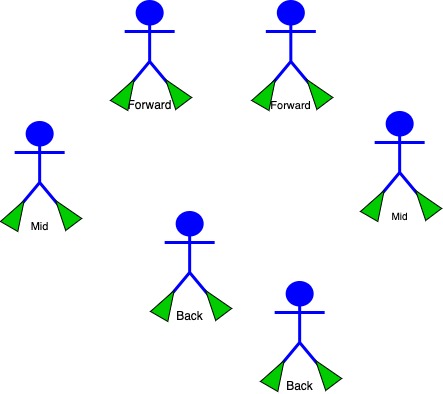
The 2-2-2 is an open-water possession formation designed to encourage play through the center of the pool rather than along the walls.
Formation Name: Muffin Top (2-2-2)
Player Layout: 2 Forwards, 2 Wings, 2 Backs
Play Style: Open Water / Possession
The formation is primarily used as a development and training structure which prioritizes:
- Open-water movement
- Layered support
- Controlled possession
- Confidence in the 3m–6m central area between trays
¶ Tactical Diagrams
- 2-2-2 Strike
- 2-2-2 Advantage Puck
- 2-2-2 Advantage Puck in Front of Goals
- 2-2-2 Disadvantage Puck
- 2-2-2 Left Wall Play
- 2-2-2 Right Wall Play
- 2-2-2 Defending Corner
- 2-2-2 Attacking Corner
¶ Main Strengths
- Encourages open-water play through the middle
- Strong layered support structure
- Creates safe passing options away from the walls
- Develops swimming and tactical awareness
- Uses a designated disruptive forward
- Encourages controlled possession and recycling
¶ Main Weaknesses
- Requires strong support awareness
- Can collapse inward under pressure
- Less natural wall pressure than traditional formations
- Requires disciplined possession
- Central mistakes can expose space quickly
¶ Core Principles
- Play through the middle of the pool
- Maintain layered support around the puck
- Stay connected without collapsing inward
- Use possession to create open-water opportunities
- Recycle possession rather than forcing progression
- Support the current engagement
- Funnel wall play back into the formation
- Keep one back in and one back out
- Attack open space after winning possession
- Build confidence playing in the 3m–6m central zone
¶ Position Responsibilities
¶ Forwards
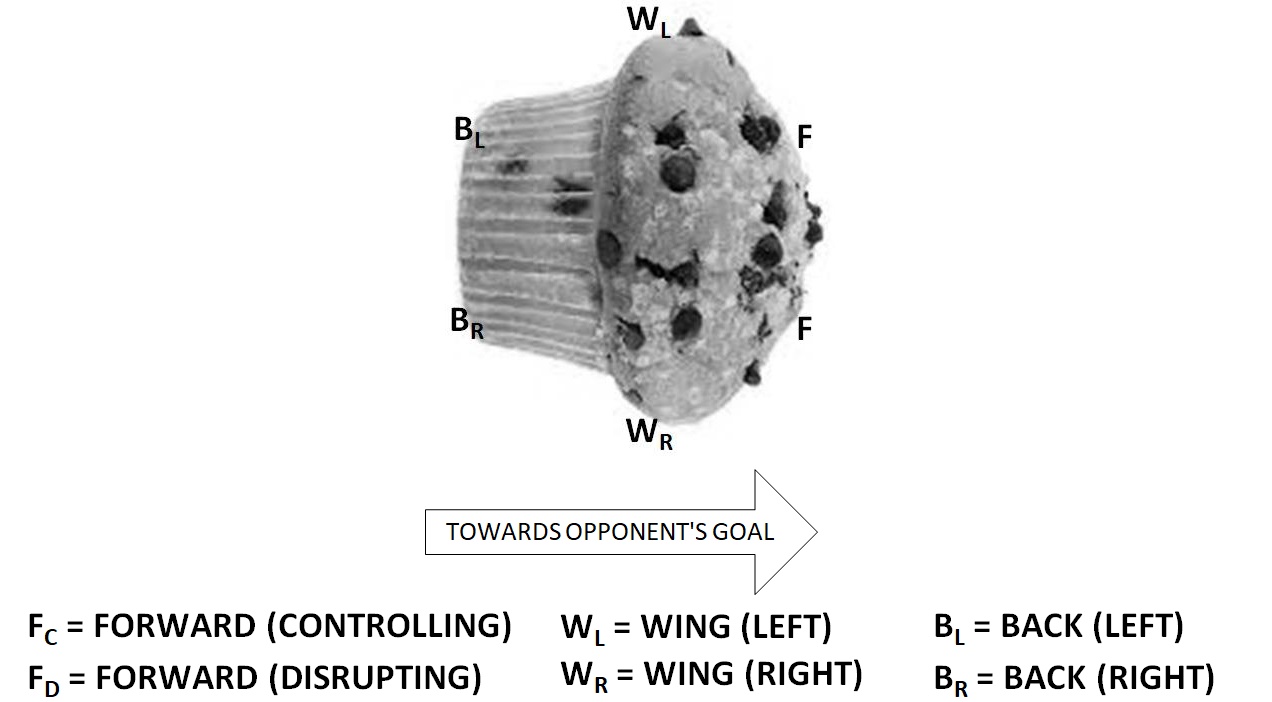
The forward line consists of:
- FC — Controlling Forward
- FD — Disrupting Forward
Both forwards work together to:
- Maintain forward pressure
- Support open-water progression
- Disrupt opponent structure
- Recycle possession safely
¶ Controlling Forward (FC)
The Controlling Forward is the primary possession player in the attacking line.
- Maintain controlled possession
- Support progression through the middle
- Provide safe forward passing options
- Recycle possession under pressure
Responsibilities
- Maintain controlled possession
- Provide safe forward passing options
- Support offensive structure through the middle
- Recycle possession under pressure
- Connect support layers through the center
Positioning
- Stay available ahead of the puck
- Stay off the wall
- Support through the middle channel
- Remain reachable for support passes
- Avoid the 1m closest to their own goal
Defense
- Pressure opposition possession through the middle
- Support contested puck situations
- Recover into the central channel
- Protect the formation shape
- Support defensive recovery
¶ Disrupting Forward (FD)
The Disrupting Forward creates pressure, disrupts structure, and creates opportunities through chaos.
- Pressure opposition transitions
- Disrupt possession
- Create attacking opportunities
- Support contested puck situations
Responsibilities
- Disrupt passing lanes
- Pressure transitions
- Create defensive chaos
- Support offensive pushes when needed
- Pressure opponents recovering through the middle
- Support contested puck situations
Positioning
- Play wherever disruption is most effective
- Stay connected to the structure
- Remain available to pressure opposition possession
- Avoid the 1m closest to their own goal
Defense
- Pressure opposition exits
- Disrupt passing options
- Force rushed decisions
- Interfere with opposition support structures
- Create turnovers through pressure
¶ Wings
The wings provide outside pressure and structural balance.
Responsibilities
- Attack open-water lanes
- Support open-water progression
- Maintain defensive balance during transitions
- Redirect wall play back into the formation
- Support recovery and possession retention
Positioning
¶ Strong Wing
- Stay behind the puck
- Avoid getting trapped on the wall
- Redirect play back into the formation
¶ Weak Wing
- Stay available behind the play
- Protect weak-side space
- Avoid overcommitting ahead of the puck
Defense
¶ Strong Wing
- Prevent outside advancement
- Funnel play back toward the center
- Pressure opposition players in open water
- Recover wall play back into the formation
¶ Weak Wing
- Act as temporary Last Back
- Protect recovery lanes
- Maintain weak-side structure
- Prevent outside breakouts
- Provide emergency defensive cover when required
¶ Backs
The Backs hold the center of the formation and are responsible for supporting the Forwards and Wings while directing offensive progression through the middle.
The Backs have the most freedom within the formation to swim and distribute the puck. Their role is to choose the option with the highest chance of success and set teammates up for success.
¶ Back Role
Responsibilities
- Hold the center of the formation
- Support the Forwards and Wings
- Direct offensive progression through the middle
- Choose high-percentage passing options
- Set teammates up for success
- Create space through Zig-Zag cycling
Positioning
- Stay behind the puck
- Keep 1 Back in and 1 Back out
- Move according to the play while remaining within the limits of the role
- Create space for support players through movement
- Remain available as a passing option
The Back's position is determined by their real-time location rather than a fixed spot in the pool. If a Back moves from one area to another, they retain the same responsibilities and passing options throughout the swim.
Defense
- Maintain the central structure of the formation
- Support the Wings and Forwards
- Keep 1 Back in and 1 Back out
- Recover possession and restart offensive structure when possible
¶ Zig-Zag Cycling
Expand Zig-Zag Summary
The Backs should be swimming if they have possession, but they are not the primary attacking players within the formation.
If there is space available:
- Swim forward
- Draw defenders
- Create passing opportunities to the Wings and Forwards
If there is heavy resistance ahead:
- Look for a lateral pass to a Wing
- Swim sideways to draw defenders toward one side
- Pass to the supporting Back behind and toward the centerline
- The receiving Back swims at an angle to create new space and passing lanes
If progression still isn't available:
- Continue cycling possession between the Backs
- Draw defenders out of position
- Wait for passing opportunities to the Wings or Forwards
The Zig-Zag helps to:
- Shift defensive pressure laterally
- Create passing lanes
- Keep the opposition off balance
- Open attacking opportunities
- Reset offensive structure
¶ Common Structural Failures
The structure commonly breaks down when:
- Players collapse too far inward
- Support layers become disconnected
- Wings overcommit ahead of the puck
- Possession becomes rushed
- Players drift into wall play unnecessarily
- Both backs become flat or trapped together
¶ Additional Information
- Playing zones
- Shape and positioning
- Strike plays
Read Full Formation Strategy and Systems
¶ Demonstration Video
Demo coming soon.
¶ Real-Life Example Video Clip
Example coming soon.
¶ Quick Reference
¶ 2-2-2
- OPEN-WATER POSSESSION FORMATION
- PLAY THROUGH THE MIDDLE
- RECYCLE UNDER PRESSURE
- FUNNEL WALL PLAY BACK INSIDE
- MAINTAIN SUPPORT LAYERS
- KEEP 1 BACK IN / 1 BACK OUT
- AVOID ISOLATED WALL PLAY