¶ 2-3-1 Formation
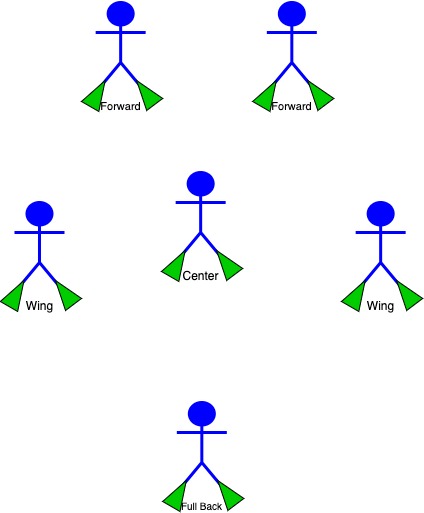
¶ Formation Overview
The 2-3-1 is a pressure-based formation designed to outnumber the opposition in both attack
Formation Name: 2-3-1
Player Layout: 2 Forwards, 2 Wings, 1 Centre, 1 Goalie
Play Style: Pressure / Overlap Support
The formation prioritizes:
- Creating overlaps across the pool (2v1 pressure)
- Using the space behind the opposition
- Turning defenders and attacking space
- Outnumbering the opposition around the puck
¶ Tactical Diagrams
- Strike
- Advantage Puck
- Advantage Puck (Front of Goals)
- Disadvantage Puck
- Left Wall Play
- Right Wall Play
- Defending Corner
- Attacking Corner
¶ Main Strengths
- Create both vertical and horizontal support simultaneously
- Strong support around the puck
- Overlap creation
- Excellent wall and wide-pool pressure
- Strong attacking momentum
- Creates continuous forward pressure
- Can overload both attack and defense
¶ Main Weaknesses
- Requires very fit players
- High swimming workload
- Breaks down if support disconnects
- Wings and forwards must recover quickly
- Poor discipline creates gaps
- Overcommitting exposes the middle
¶ Core Principles
- Turn defenders rather than pass around them
- Swim to create attacking angles
- Put the puck into space
- Support the current engagement
- Attack with numbers
- Pressure early and aggressively
¶ Passing Style
Passing in the 2-3-1 is built around movement and space creation rather than static passing angles.
Players should:
- Look for opposition positioning, not teammates
- Put the puck behind defenders
- Pass into space rather than directly to players
- Create angles through swimming
- Attack where the puck will be next
The formation relies heavily on swimming speed and forward momentum.
¶ Position Responsibilities
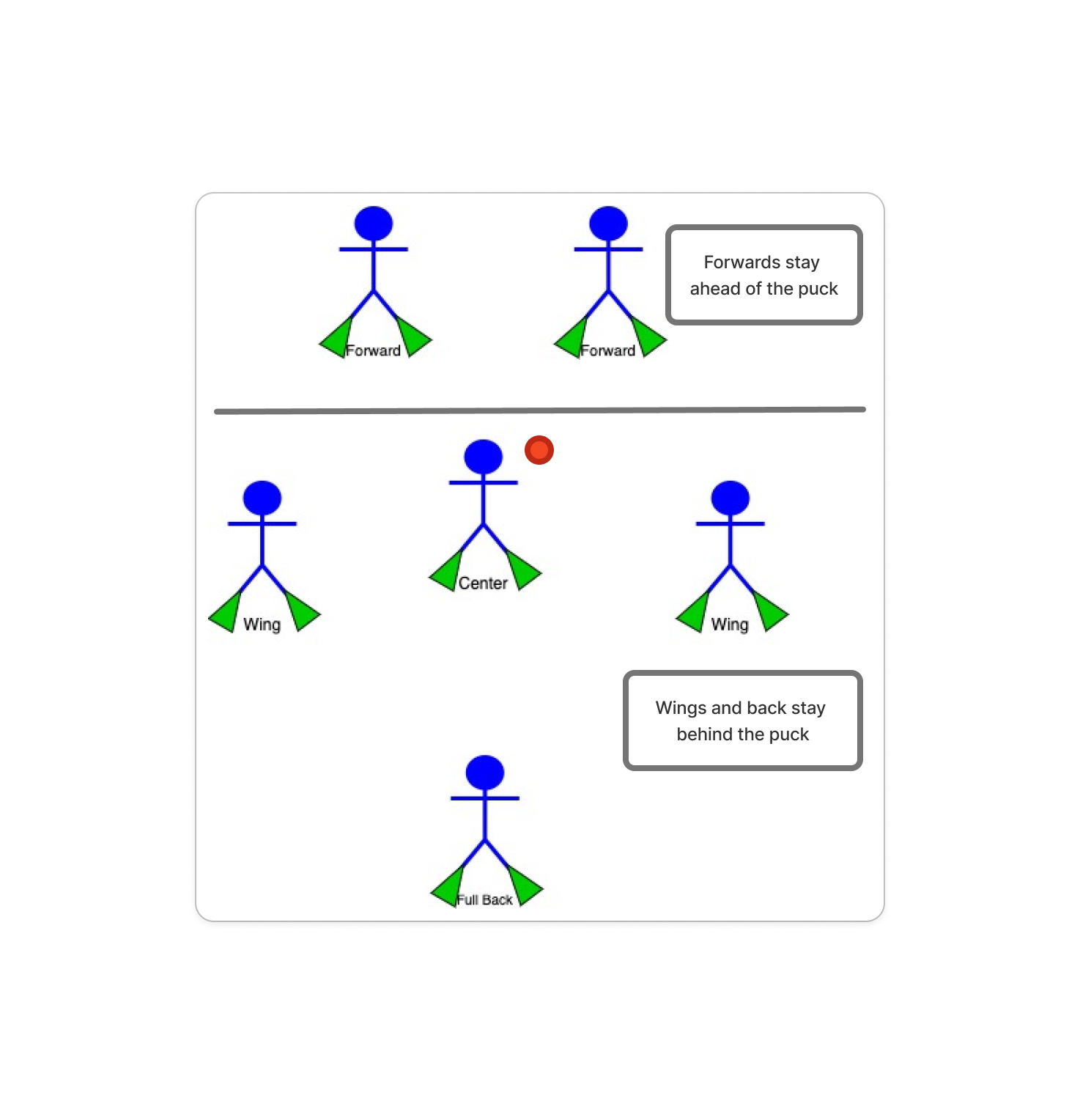
¶ Forwards
The forwards stay ahead of the puck and work together as a pair.
- Stay ahead of the puck
- Do not swap sides
- Stay within arm’s reach of each other
- Maintain forward momentum
- Turn defenders toward their own goal
¶ Forward Role
Responsibilities
- Score goals
- Receive forward passes
- Create 2v1 pressure
- Back pick defenders
- Block passing lanes
- Disrupt opposition exits
Positioning
- In 2v1 situations, the supporting forward should stay very close to the defender to remove backward exit options and trap the play under pressure.
- They should not swim far ahead waiting for long passes.
- When one forward has possession, the other supports beside them rather than swimming into isolated space.
Defense
¶ Strong Forward Defensive Role
The Strong Forward’s main defensive role is to:
- Back-pick opposition players curling backward
- Cut off backward exit options
- Pressure recovering defenders
- Trap play along the wall or under pressure
¶ Weak Forward Defensive Role
The Weak Forward protects open space and supports defensive recovery.
Responsibilities include:
- Protecting weak-side space
- Sealing central recovery lanes
- Acting as support behind pressure
- Cycling with the Center and when they need recovery time
- Supporting defensive corners without overcommitting
In defensive corners, the Weak Forward and Center may rotate temporarily to maintain pressure while allowing recovery breathing space.
¶ Wings
The wings are the outside players in the “3” of the formation.
The wing on the puck side is the Strong-Side Wing.
The opposite wing is the Weak-Side Wing.
¶ Wing Role
Responsibilities
¶ Strong-Side Wing
- Dive behind the puck
- Drive forward space
- Connect with forwards past defenders
- Force defenders sideways or to curl
- Support the Strong Forward
¶ Weak-Side Wing
- Cover the weak side and open space
- Stay available for swing passes
- Protect against opposition swing
- Counterattack after turnovers
Positioning
¶ Strong-Side Wing
- Stay behind the puck
- Stay on your side
- Support the Strong Forward
- Attack forward space when available
¶ Weak-Side Wing
- Stay behind the puck
- Cover weak-side space
- Remain available for swing passes
- Avoid drifting too far from support
- Avoid playing too far back and not able to pressure the opposition's swing fast enough
Defense
¶ Strong-Side Wing
- Pressure the puck aggressively
- Close space quickly
- Prevent free swimming space
- Create weak angles and 2v1 opportunities
¶ Weak-Side Wing
- Protect against swings
- Cover open space
- Engage if the opposition swings
- Support defensive recovery
¶ Center
The center controls the middle of the structure and acts as the primary support distributor.
- Hold the middle
- Stay predictable
- Stay off the wall
- Support all attacking players
- Distribute safely under pressure
¶ Center Role
Responsibilities
- Support both Wings
- Provide central passing options
- Start swings
- Connect with the Forwards and Wings
- Maintain middle structure
- Support pressure situations
Positioning
- Hold the middle channel
- Stay off the wall
- Remain available as a passing option
- Stay connected to both Wings
- Support behind the puck when needed
Defense
- Protect the middle channel
- Stop direct attacks through the center
- Redirect attackers toward supporting teammates
- Support defensive pressure without exposing the middle
The Center should avoid overcommitting and leaving the middle channel open.
¶ Full Back
The full back, also referred to as the stopper or goalie, supports behind the structure and fills gaps in the midline.
- Support behind pressure
- Fill gaps in the structure
- Activate selectively
¶ Full Back Role
Responsibilities
- Stabilize possession
- Support pressured players
- Cover exposed spaces
- Reset the structure
- Start deep swings
Positioning
- Stay behind the structure
- Fill exposed support positions
- Support behind pressure
- Rotate into Wing positions when needed
- Rotate into Center positions when needed
The Full Back should position themselves where support is needed most while maintaining structure behind the play.
Defense
- Cover exposed spaces
- Support recovering teammates
- Fill gaps created by rotations
- Maintain structure behind pressure
The Full Back should avoid overcommitting and instead provide stability behind the play.
¶ Possession Principles
The 2-3-1 prioritizes pressure over possession.
Players should:
- Create pressure by playing the space behind the opposition
- Turn the opposition around and smother them with pressure
- Maintain pressure by following up a pass
- Avoid flat passes across organized defenders
- Maintain close support around the puck carrier
The formation relies on support and pressure by driving attacking passes.
¶ Common Structural Failures
The structure commonly breaks down when:
- Players don't turn the opposition
- Forwards too far to support the backs
- The center becomes exposed
- Pressure arrives too late
- Players don't follow up a pass
¶ Demonstration Video
Demo video coming soon!
¶ Real-Life Example Video Clip
Add real-life video here.
¶ Quick Reference
¶ 2-3-1 Formation
- COMPACT PRESSURE FORMATION
- FORWARDS STAY TOGETHER
- WINGS STAY BEHIND THE PUCK
- CENTER HOLDS THE MIDDLE
- FULL BACK FILLS GAPS
- CREATE 2v1 PRESSURE
- RECYCLE WHEN SPACE CLOSES
- DO NOT OVERCOMMIT