¶ 3–3 Formation
¶ Formation Overview
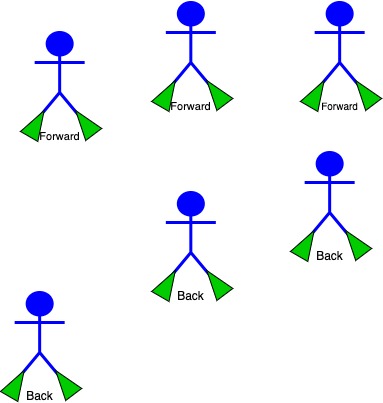
The 3–3 is a wide wall-pressure formation built around structured cycling, layered support, and rapid side switching.
Formation Name: 3–3
Player Layout: 3 Forwards / 3 Backs
Play Style: Wide Wall Pressure / Structured Cycling
The formation is designed to:
- Draw defenders onto the wall
- Open the game to the opposite side
- Maintain continuous support behind the puck
- Create wide attacking opportunities
- Pressure through layered cycling
The structure places high swimming demands on the backs and wings but creates strong scoring opportunities through constant movement and support.
¶ Tactical Diagrams
- Strike
- Advantage Puck
- Advantage Puck (Front of Goals)
- Disadvantage Puck
- Left Wall Play
- Right Wall Play
- Defending Corner
- Attacking Corner
¶ Main Strengths
- Strong wall control
- Quick side switching
- Wide attacking structure
- Good scoring opportunities for backs and wings on open side
¶ Main Weaknesses
- Only two lines of defense
- Physically demanding structure
- High swimming workload
¶ Core Principles
- Pull defenders onto the wall
- Once defense is sucked onto wall play open space
¶ Passing Style
Passing in the 3-3 is built around possession retention, wall progression, and side switching.
Players should:
- Drive the puck up the wall before looking to switch play
- Draw defenders onto one side before attacking the other
- Use swing passes to stretch the opposition structure
- Create space through swimming before passing
- Attack open space after a successful switch
The formation relies heavily on wall drives, support passes, and long swing passes to move defenders and create attacking opportunities.
¶ Position Responsibilities
¶ Forwards
The forwards provide width, support, and layered pressure ahead of the backs.
- Strong drives on the wall
- Maintain width without disconnecting
- Strong swims to the open side
¶ Strong Forward
Responsibilities
- Provide a wide wall option
- Create outside passing lanes
- Create cross-pool opportunities
- Act as the primary wide attacking option
- Support wall progression
Positioning
- Back-pick opposition players
- Pressure from the opposite side of the backs
- Prevent easy exits from the wall
- Support current defensive engagements
Defense
- Back-pick opposition players
- Pressure from the opposite side of the backs
- Prevent easy exits from the wall
- Support current defensive engagements
¶ Center Forward
Responsibilities
- Fill missing forward positions
- Support flexibly around the puck
- Connect wall play to center support
- Stay ahead during attacks
Positioning
- Move into whichever forward position is vacant
- Stay ahead of the puck when attacking
- Support beside or slightly behind the puck carrier when required
- Remain connected to both forwards
Defense
- Side-pick defensively
- Prevent center passes
- Drive opponents toward the wall
- Support defensive recovery
¶ Weak Forward
Responsibilities
- Support and seal the weak side
- Fill missing forward positions
- When puck received attack open space
- Act as last-player-back when required
Positioning
- Stay connected to weak-side support
- Protect recovery space during switches
- Avoid attacking the same side as the backs
- Remain available for cross-pool switches
Defense
- Seal weak-side exits
- Back-pick recovering players
- Protect space near goal
- Recover behind the structure when needed
¶ Backs
The backs maintain defensive structure and provide continuous cycling support behind the puck.
¶ Strong + Swing Back
Responsibilities
- Strong wall drives
- look for opportunities to break off the wall
- Open switches across the pool
- Re-engage after recover
Positioning
- Stay tight behind forward support
- One back engages while the other recovers
- Stay between puck and goal
- Maintain the cycling structure
- Line up on the wall on attack
Defense
- Initiate defensive pressure
- Prevent direct middle breakouts
- Maintain defensive depth during rotations
- Recover quickly after engagements
¶ Weak Back
Responsibilities
- Cover and contain
- Protect middle space
- Receive swing passes
- Support cycle breakdowns
- Provide emergency defensive cover
Positioning
- Cover and contain
- Protect middle space
- Receive swing passes
- Support cycle breakdowns
Defense
- Cycle the puck toward a wall for safe space
- Cover defensive space behind pressure
- Delay opposition attacks until support arrives
¶ Possession Principles
The 3-3 prioritizes controlling the wall and forcing the opposition to play in predictable areas.
Players should:
- Maintain possession on the wall
- Drive the puck up the wall before switching play
- Only leave the wall when in control of possession
- Swing to the open side when pressure builds
When possession is lost:
- Push the puck back toward the wall
- Prevent the opposition from accessing open-water space
- Deny swings to the open side
¶ Common Structural Failures
The structure commonly breaks down when:
- Play gets stuck on the wall
- Open side players never get involved
- Not enough depth in the defensive line if opposition starts swimming angles
¶ Demonstration Video
Add demo video here.
¶ Real-Life Example Video Clip
Add real-life video here.
¶ Quick Reference
¶ 3–3
- WALL PRESSURE FORMATION
- PULL DEFENDERS ONTO THE WALL
- SWITCH PLAY ACROSS THE POOL